The blockchain industry is undergoing a structural paradigm shift. As legacy Layer-1 networks like Ethereum struggle with low throughput (historically hovering around 15–45 transactions per second) and exorbitant network congestion fees, the ecosystem has aggressively pivoted toward Layer-2 scaling solutions. While optimistic rollups offered an initial stopgap, Zero-Knowledge Proofs (ZKPs)—specifically zk-Rollups and zkEVMs—have emerged as the definitive endgame for Web3 scalability and privacy worldwide.
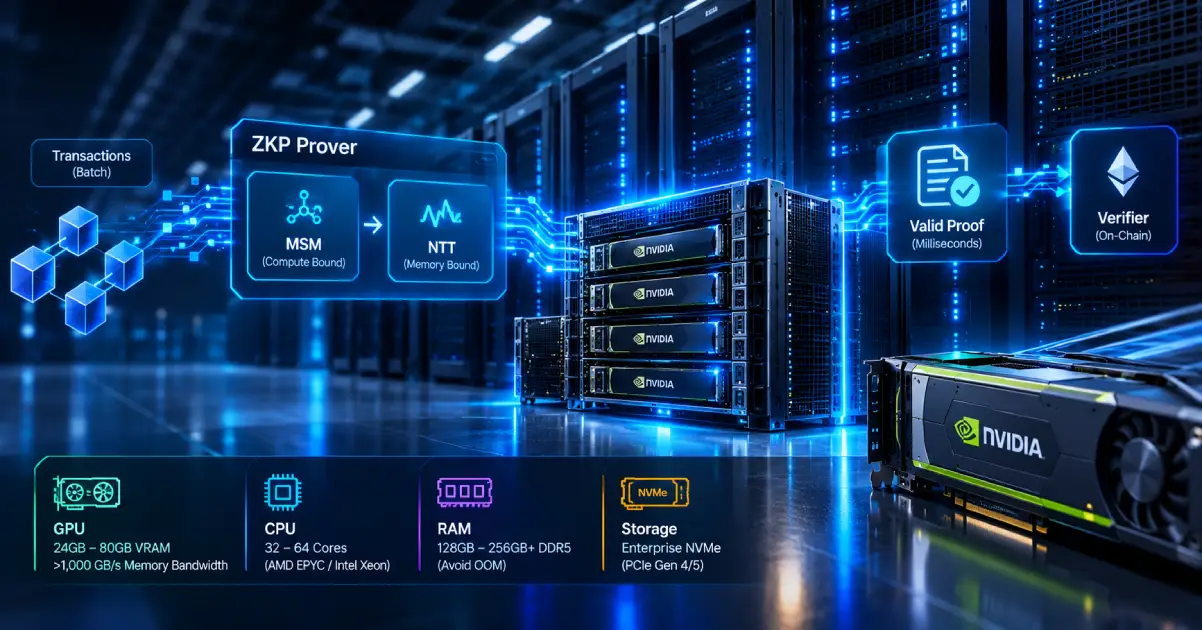
Zero-Knowledge Proofs are cryptographic protocols that allow a "Prover" to mathematically demonstrate to a "Verifier" that a computational statement is true, without revealing any underlying sensitive information. In the context of blockchain rollups (such as Scroll, Polygon zkEVM, and ZKsync Era), a Prover batches thousands of off-chain transactions, executes them, and generates a singular cryptographic proof. The Verifier (a smart contract on Ethereum) can then validate this proof in milliseconds.
However, this elegant asymmetry hides a brutal physical reality: while proof verification is incredibly cheap and fast, proof generation is an absolute computational nightmare. Generating ZKPs for complex smart contract execution requires immense, sustained, and highly parallelized hardware. For infrastructure architects and Web3 node operators building global decentralized networks, hosting ZKP Provers requires a fundamental understanding of bare-metal hardware optimization.
The Cryptographic Bottleneck: Why ZKPs Demand Extreme Compute
To understand why standard cloud hosting falls apart under ZK workloads, we must look at the mathematical engines driving the proofs. Modern ZK systems (such as Groth16, PLONK, and STARKs) rely heavily on complex polynomial commitments and finite-field arithmetic. The proof generation pipeline is dominated by two massive computational kernels:
Because the underlying arithmetic operations execute exclusively on 32-bit integer pipelines and deal with large integers (e.g., 256-bit or 377-bit fields broken into smaller word-sized limbs), older or budget-tier GPUs fail to deliver the necessary performance to keep decentralized networks synchronized.
Why Bare Metal Defeats the Public Cloud for ZK Proving
Today, most ZK provers start on CPUs, but the industry is rapidly transitioning to hardware acceleration via GPUs, FPGAs, and specialized ASICs. GPU-accelerated ZKPs can achieve up to ~200x faster execution times over CPU baselines when running core cryptographic kernels.
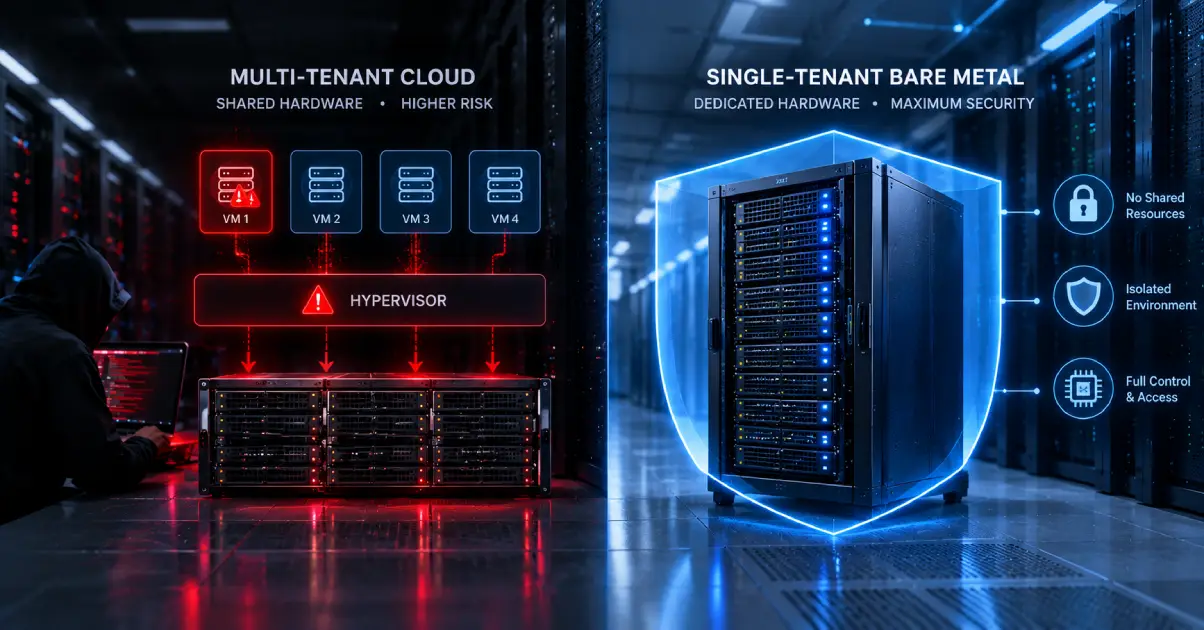
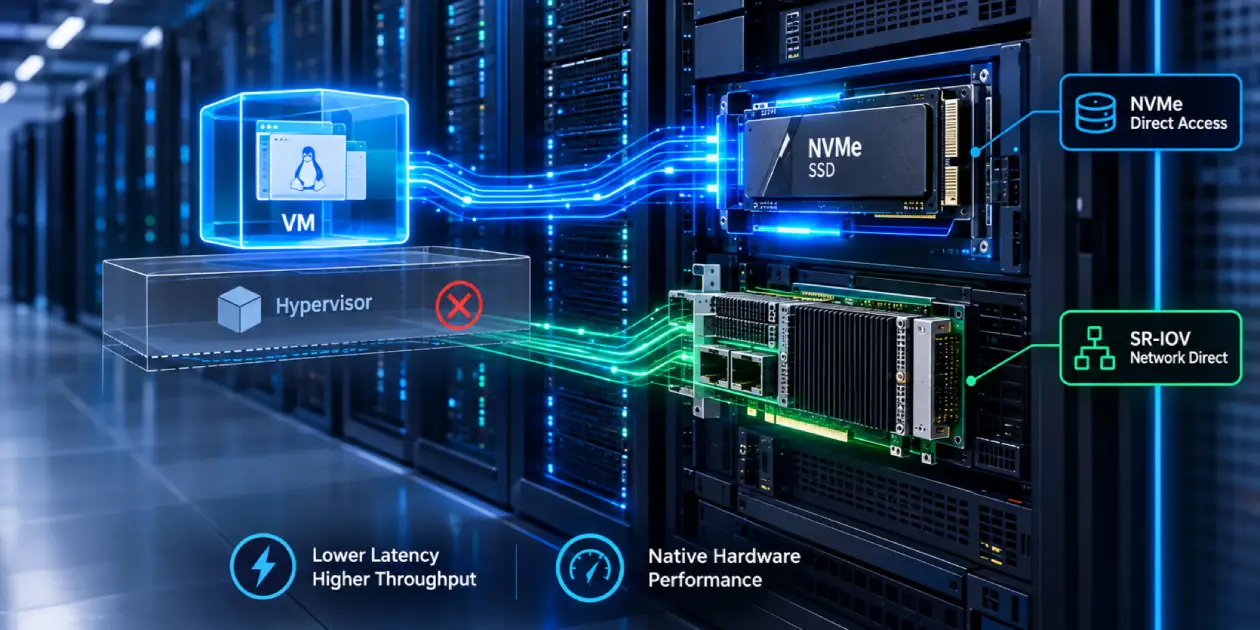
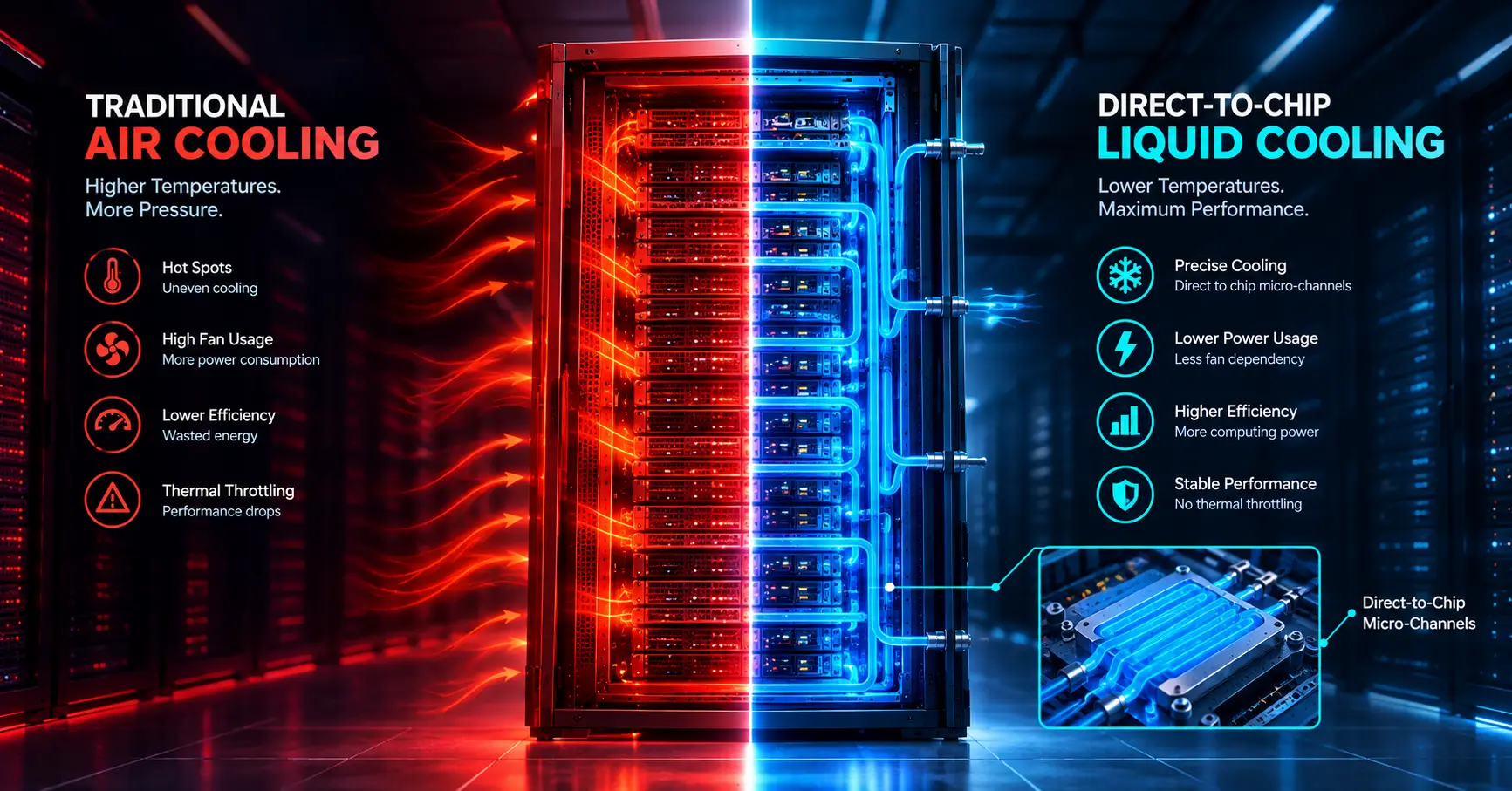
When deploying GPU-accelerated provers globally, infrastructure teams must choose between public cloud GPU instances (like AWS EC2 P4/P5 or GCP A2 VMs) and dedicated bare-metal servers. For ZKP generation, bare metal wins unconditionally for three primary reasons:
- Virtualization Tax: Hypervisors abstract direct PCIe and cache access, causing micro-latencies that devastate memory-bound NTT operations.
- Thermal Throttling: Cloud instances suffer from "noisy neighbors" and provider-level thermal limits, throttling GPUs mid-proof.
- Destroyed Unit Economics: Renting top-tier GPUs (like A100s) by the hour makes operating a continuous, high-volume prover node financially unviable.
Architecting the Ultimate ZKP Prover Server
Building an optimized ZKP server is not about simply buying the most expensive components; it is about eliminating bottlenecks. The ideal server integrates massive GPU parallelism, high memory bandwidth, and immense RAM capacity.
Preparing for the zkVM Era
The ZKP ecosystem is moving rapidly away from hand-written, application-specific circuits. The industry standard is shifting toward zkVMs (Zero-Knowledge Virtual Machines)—such as RISC Zero, SP1 (Succinct), and Jolt. These virtual machines allow developers to write ordinary Rust code, compile it to a standard architecture like RISC-V, and have the zkVM automatically generate a proof that the program executed correctly.
This transition means that prover hardware must become increasingly generalized across global networks. As zkVMs like Succinct's SP1 achieve sub-12-second real-time proving of Ethereum blocks on multi-GPU rigs, the demand for standardized, high-performance bare-metal clusters will explode. Prover networks will look less like specialized ASIC crypto-mining farms and more like enterprise High-Performance Computing (HPC) clusters deployed in globally diverse data centers.
Conclusion: The Bare Metal Imperative
Zero-Knowledge Proof technology has evolved from theoretical cryptography to production-ready infrastructure, actively scaling global blockchain ecosystems. However, the computational toll of converting execution traces into verifiable mathematical truths is immense.
For developers, Layer-2 operators, and decentralized prover pools, the hardware mandate is clear: standardize on GPUs as the default proving backend, over-provision RAM to avoid catastrophic swap failures, and deploy on bare-metal infrastructure to escape the virtualization tax. By leveraging custom-architected dedicated servers from iDatam, you can drive down the cost-per-proof, guarantee the latency required for real-time validation, and establish a robust foundation for the privacy-preserving networks of the future.
Frequently Asked Questions
iDatam Recommended Resources

Hardware
Why Are Intel, AMD, and Ampere Dominating the CPU Market?
When we choose a CPU, we had a lot to consider. However, the landscape of CPUs is mainly dominated by a few key companies depending on the market segment. No matter what kind of CPUs you're looking for, here's a breakdown of how things evolved and where they stand today.


Hardware
What is ARM?
ARM (Advanced RISC Machines) is a widely used family of RISC architectures developed by Arm Ltd., known for its energy efficiency and scalability. Since its founding in 1990, over 180 billion ARM-based chips have been shipped, making it the leading processor family globally.

Hardware
A Complete Guide to RAID Configurations: Balancing Performance and Data Protection
This guide digs into the world of RAID configurations, examining their advantages, disadvantages, and ideal use cases, as businesses and individuals increasingly seek ways to optimize their storage solutions in a data-driven world.
Discover iDatam Dedicated Server Locations
iDatam servers are available around the world, providing diverse options for hosting Web3 infrastructure and ZKP provers. Each region offers unique advantages, making it easier to choose a location that best suits your specific operational needs.