The global landscape of enterprise IT infrastructure is hitting a physical wall. For nearly two decades, the blueprint for European digital deployment was simple: select a tier-one market within the traditional FLAP (Frankfurt, London, Amsterdam, Paris) grid and scale infinitely. However, as we move through 2026, that legacy framework is fracturing under the weight of unprecedented architectural pressures. The explosive rise of generative artificial intelligence, massive predictive language modeling, and sprawling big data analytics pipelines have transformed the modern data center from a standard facility into an incredibly resource-intensive industrial power plant.
Concurrently, traditional European hosting capitals are experiencing historic constraints. Power grids in Central Europe are overextended, land prices are skyrocketing, and strict local environmental mandates are penalizing the high power usage effectiveness (PUE) metrics characteristic of legacy data facilities. When a single modern AI hardware rack can draw anywhere from 40kW to over 100kW, operating within an energy-starved, temperate climate zone becomes an operational and financial liability.
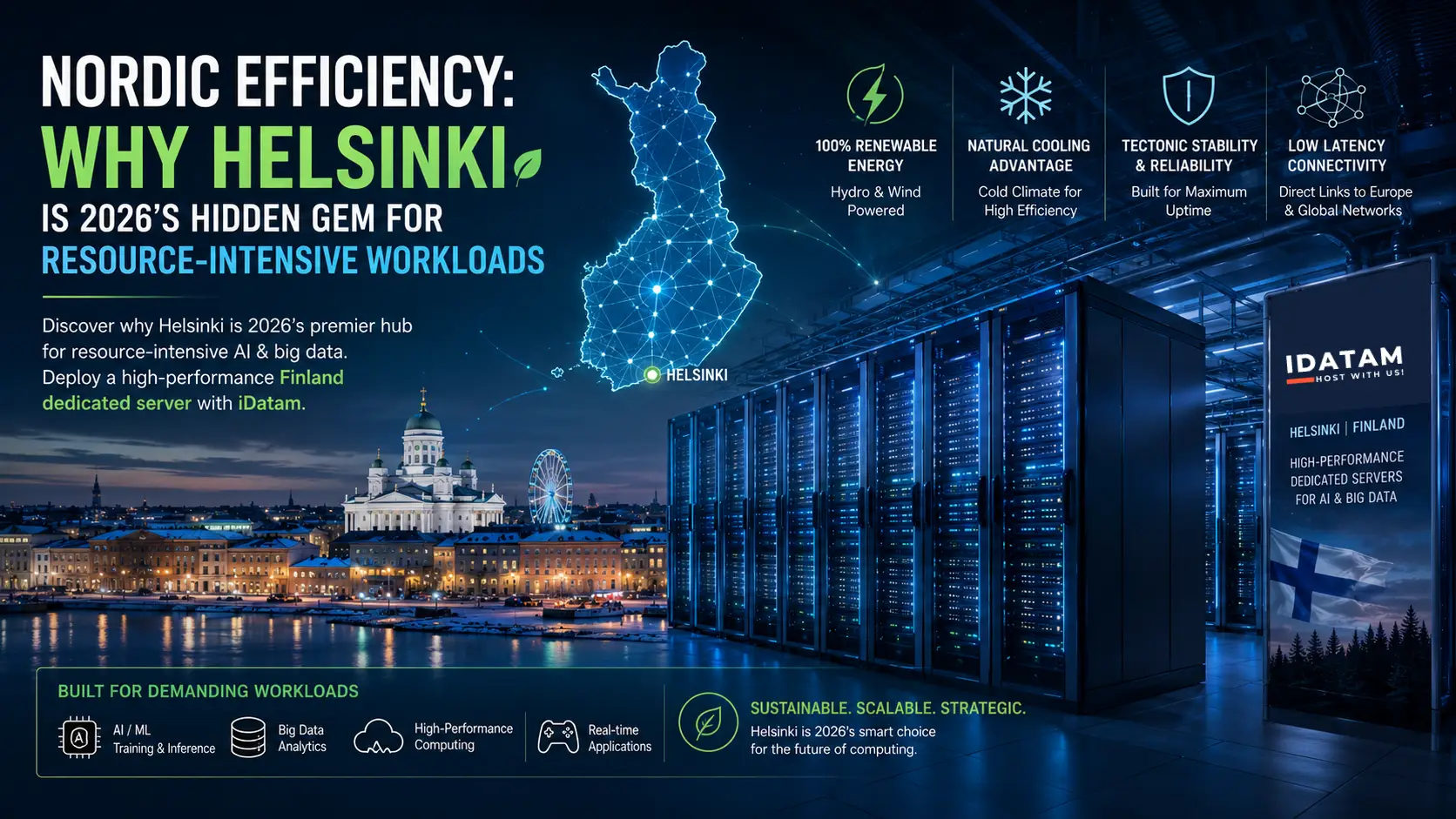
Faced with these realities, enterprise architects and technology leaders are shifting their gaze northward. Positioned at the intersection of extreme tectonic stability, pristine renewable energy infrastructure, and unique geographical advantages, Finland has emerged as a powerhouse for modern computing. Far from being a peripheral option, utilizing a localized Finland dedicated server has become the premier strategy for organizations looking to scale massive computational workloads affordably, sustainably, and with unmatched structural stability.
The Physics of Natural Cooling: Maximizing Thermal Efficiency
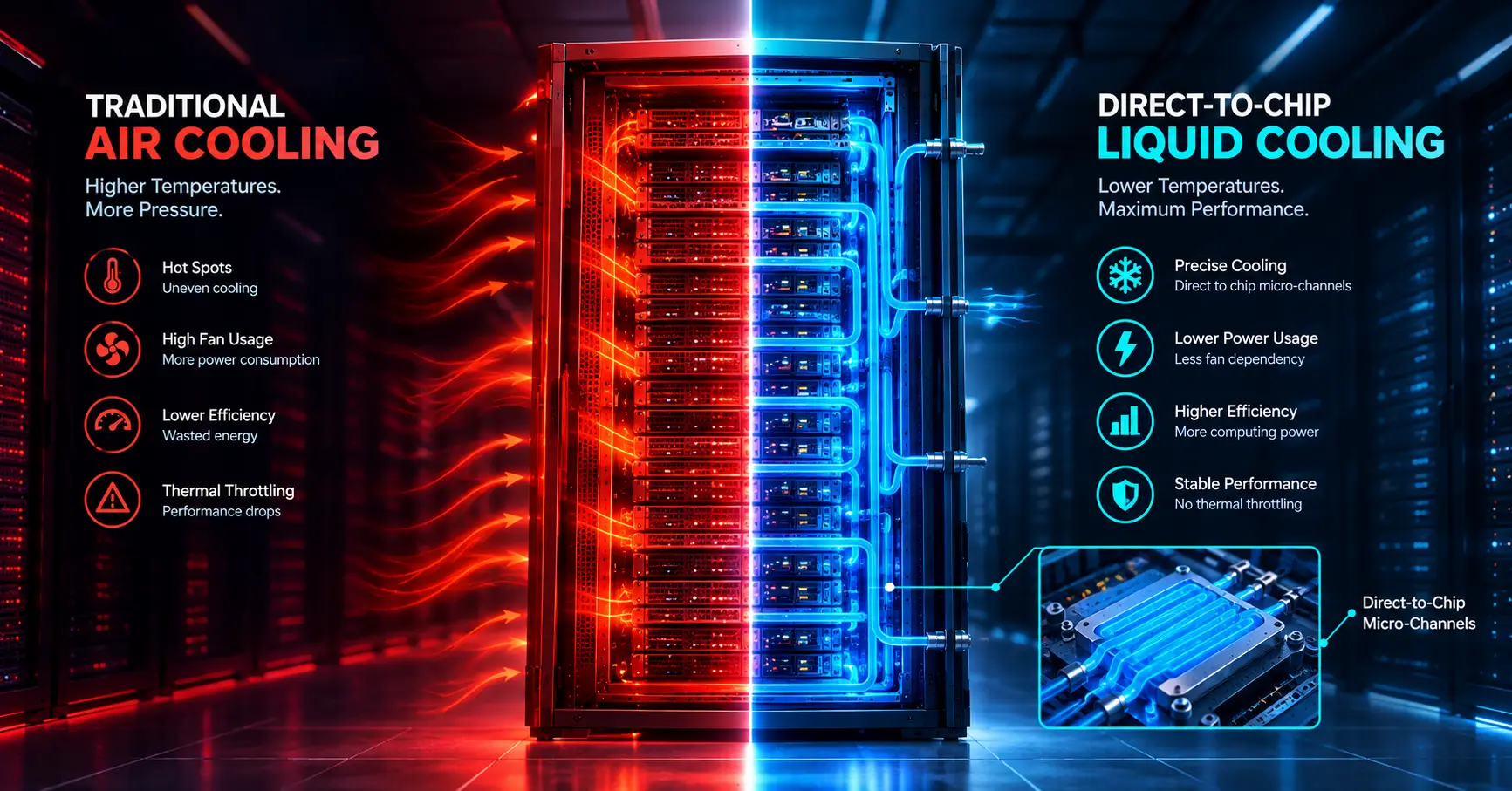
The primary operational advantage of shifting heavy compute clusters to Finland is rooted in the fundamental laws of thermodynamics. In a standard data center operating in Central or Southern Europe, a massive percentage of every megawatt of electrical energy drawn from the utility grid never actually reaches a processor. Instead, it is consumed by complex, energy-heavy air conditioning units, industrial chillers, and evaporative cooling towers tasked with keeping components from experiencing destructive thermal throttling.
In Helsinki, nature provides the solution. The Finnish climate allows for what engineers call "direct free cooling" or ambient air-to-air heat exchange for the vast majority of the calendar year. By drawing cold, crisp Nordic air directly into the facility through sophisticated filtration and mixing chambers, data centers can maintain optimal operating temperatures for high-density hardware stacks without running power-hungry mechanical refrigeration compressors.
This natural cooling advantage drops the facility's Power Usage Effectiveness (PUE) to near-unity levels, frequently hovering between 1.10 and 1.15. When contrasted with the European average of 1.6 to 1.8, the financial implications for resource-intensive operations are profound. By significantly reducing cooling overhead, every euro spent on electricity goes directly into powering your enterprise processors, running analytics queries, and driving machine learning inference loops.
The Symbiotic Grid: Waste Heat Recovery and Municipal Integration
Finland’s approach to infrastructure sustainability extends far beyond simply saving energy; it actively redefines the role of the data center within modern urban ecosystems. Helsinki is a global leader in the deployment of large-scale industrial circular energy economies, driven specifically by the integration of data facilities with the city's extensive municipal district heating network.
In a conventional deployment, the massive volume of thermal energy generated by high-density processors is treated as an undesirable byproduct and vented directly into the atmosphere. In Helsinki's advanced data centers, this logic is flipped. Using specialized liquid-to-liquid heat exchangers and industrial heat pumps, the hot water exiting server blocks is captured and channeled directly into the local district heating pipes managed by municipal energy utility providers.
| Infrastructure Parameter | Central European Legacy Site | iDatam Helsinki Sovereign Site |
|---|---|---|
| Primary Cooling Method | Mechanical Chillers / Evaporative | Natural Free Cooling / Liquid Loops |
| Average Operational PUE | 1.65 – 1.85 | 1.12 – 1.18 (Optimized) |
| Grid Power Sourcing | Mixed Fossil / Strained Grid | 100% Renewable (Wind, Hydro, Nuclear) |
| Thermal Output Fate | Vented to Atmosphere (Waste) | Repurposed into Municipal District Heating |
| Compute Environment | Frequently Virtualized / Shared | Exclusive, Single-Tenant Bare Metal |
This framework transforms data centers from energy consumers into urban heat providers. The thermal waste from a single high-density bare-metal deployment can heat thousands of local residential homes and commercial buildings during the cold winter months.
For enterprise compliance officers navigating the strict corporate sustainability disclosure rules taking effect across Europe in 2026, this integration provides a significant advantage. By choosing an infrastructure model that actively reduces carbon footprints through thermal recycling, companies can present a fully auditable green profile that satisfies both consumer expectations and rigorous regulatory demands.
Overcoming the Distance Myth: The Baltic Fiber Corridor
Historically, some technology leaders hesitated to deploy infrastructure in the Nordic countries due to concerns over network transit delays. The assumption was that positioning hardware outside the immediate geographical boundaries of Frankfurt or London would introduce unacceptable latency penalties for applications serving users in Central Europe.
This assumption is entirely outdated. The deployment of next-generation, high-capacity subsea fiber optic networks—most notably the C-Lion1 submarine cable—has completely altered the digital geography of Northern Europe. Running directly across the bed of the Baltic Sea from Helsinki to Rostock, Germany, this ultra-low-latency fiber highway establishes a direct, high-capacity link that bypasses traditional, multi-hop terrestrial pathways.
RTT: ~15-18ms
Thanks to these direct subsea routes, round-trip times (RTT) from Helsinki to the primary network exchanges of Central Europe have dropped to between 15 and 18 milliseconds. For resource-intensive workloads like big data analytics processing, batch financial clearing, log compilation, and real-time AI inference pipelines, this level of responsiveness is exceptional.
Unless your application requires microsecond-level proximity for high-frequency algorithmic trading, the minor latency trade-off is completely unnoticeable. In exchange, your business gains access to an environment characterized by immense power stability, lower operational costs, and near-limitless capacity to scale. This makes the region a prime choice for executing Helsinki edge computing strategies that distribute processing loads intelligently away from congested, high-cost metropolitan centers.
Total Operational Autonomy: The Single-Tenant Bare-Metal Imperative
As the complexity of enterprise data workloads escalates, the limitations of multi-tenant cloud architectures are becoming increasingly clear. In a standard shared public cloud setup, your critical processing workloads run inside a highly abstracted virtualization layer, sharing physical CPU cores, system memory buses, and network interfaces with thousands of unmonitored external applications.
For resource-heavy tasks like running complex Apache Spark analytics engines, training localized machine learning models, or hosting high-capacity enterprise databases, this multi-tenant model introduces significant inefficiencies. Your applications are constantly vulnerable to the "noisy neighbor" effect—sudden, unpredictable performance degradation that occurs when an adjacent tenant on the same physical host experiences a massive traffic surge or runs an intensive batch job.
Stepping away from virtualized cloud systems and moving to dedicated physical infrastructure eliminates these performance bottlenecks completely. Selecting single-tenant hardware ensures that every single clock cycle of the enterprise-grade processor, every byte of high-speed Error-Correcting Code (ECC) memory, and every input/output channel on the NVMe storage array is exclusively assigned to your enterprise workloads. This clean environment removes hypervisor software overhead, eliminates resource contention, and provides the completely predictable, rock-solid performance profile required to process massive datasets efficiently under continuous load.
Unmatched Grid Stability and Geopolitical Resilience
When evaluating locations for core enterprise infrastructure, operational security and energy grid reliability are paramount considerations. A data center is only as dependable as the electrical grid that powers it. In an era marked by shifting global energy dynamics and increasing strain on public utilities, Finland offers a level of operational security that is virtually unmatched across the continent.
The Finnish national electrical grid, operated by Fingrid, is universally recognized as one of the most stable and resilient power networks in the world. Finland has systematically built out a balanced, high-capacity energy portfolio that relies heavily on a dependable mix of nuclear power, wind generation, hydro-electric installations, and biomass energy. The commissioning of high-capacity nuclear production facilities like Olkiluoto 3 has provided the nation with an immense surplus of clean, domestic baseload power, insulating the country from the extreme pricing volatility and energy supply threats that frequently disrupt central European markets.
Furthermore, Finland features exceptional geopolitical and physical stability. Situated on a massive, seismically inert continental shield, the region faces zero risk from catastrophic earthquakes, tsunamis, or volcanic disruptions. Coupled with strict local physical security laws, comprehensive cyber defense frameworks, and an institutional commitment to data privacy, hosting your primary corporate datasets within Finnish borders provides an unshakeable operational shield. This ensuring your business continuity remains entirely protected, regardless of external economic or political turbulence.
High-Capacity Security: Inline Defense Against Volumetric Cyber Threats
As global networks become more interconnected, the frequency and scale of malicious online activities continue to rise. In 2026, large-scale distributed denial-of-service (DDoS) campaigns have become common tools for digital extortion and corporate disruption, frequently targeting high-traffic API gateways, enterprise SaaS portals, and critical data analytics infrastructure.
For resource-intensive computing hubs handling sensitive enterprise data, relying on basic software-based firewall rules running inside your local operating system is an outdated security strategy. If a malicious botnet targets your public IP infrastructure with hundreds of gigabits of synthetic traffic, your network interfaces will become completely saturated long before your software layer can inspect, filter, or drop the incoming packets.
Effective defense requires an enterprise-grade, hardware-accelerated mitigation architecture built directly into the core carrier routing edge. This system actively inspects and filters network traffic at full line-rate capacity before it can ever approach your server's physical ports:
(Pure, Authorized Data)
By identifying and dropping malicious reflection and amplification attacks at the network edge, advanced mitigation systems ensure that your dedicated hardware only encounters legitimate, authorized traffic requests. This automated, multi-layered security framework protects your systems from artificial resource exhaustion, safeguards application performance, and guarantees that your core analytics engines remain perfectly stable and accessible to your global teams during major online disruptions.
The iDatam Infrastructure Blueprint in Helsinki
Deploying a high-performance enterprise footprint that successfully leverages the immense natural advantages of the Nordic region requires a capable and experienced infrastructure partner. iDatam has specifically engineered its presence in Finland to provide organizations with an unmatched combination of raw computational performance, network reliability, and advanced technical support.
High-End Physical Hardware Standards
iDatam’s Helsinki edge computing setups are built without compromise, utilizing top-tier, modern components engineered for continuous enterprise performance:
Next-generation AMD EPYC and Intel Xeon Scalable processors featuring high core and thread counts to manage dense, multi-threaded analytical applications.
High-speed DDR5 ECC (Error-Correcting Code) memory configurations that actively detect and repair single-bit memory errors before they can cause system crashes or data corruption.
Blazing-fast NVMe solid-state storage arrays configured in redundant hardware RAID layouts, providing exceptional input/output speeds alongside data mirroring protection.
Complete Sovereign Control and Custom Networking
When you deploy a Finland dedicated server with iDatam, your engineering teams secure complete, root-level control and IPMI access from the BIOS layer up. There are no shared management platforms, no virtual abstractions, and no unmonitored data movements. Network configurations can be precisely tailored to match your specific performance demands, featuring high-capacity uplinks and unmetered bandwidth options to distribute massive data sets cleanly across the continent without unexpected cost penalties.
Resilient, Certified Infrastructure Environments
iDatam’s physical systems in Finland are situated within premium, certified data center facilities that leverage direct free cooling arrays and advanced district heating energy reuse pipelines. Backed by redundant power architecture, automated environmental controls, and multi-layered physical security checks, iDatam provides the continuous availability, economic predictability, and sustainability compliance that modern enterprise operations require.
Unleashing the Potential of High-Efficiency Computing
The modern digital economy rewards organizations that recognize that infrastructure placement is a key driver of operational efficiency, cost management, and environmental compliance. Attempting to manage massive big data arrays, complex data warehousing solutions, or intensive real-time AI pipelines within legacy, power-constrained cloud networks creates unnecessary financial overhead and serious sustainability vulnerabilities under modern disclosure mandates.
Choosing single-tenant, high-performance physical environments in the Finnish capital provides your business with a resilient, highly capable operational foundation. By combining raw processing power with immediate proximity to major global Baltic network exchanges, your applications can deliver the fluid, consistent experiences your users expect while driving down cooling costs and remaining perfectly aligned with strict environmental guidelines.
Do not allow your business scalability to be limited by cloud virtualization layers or inefficient, high-cost network routing. Explore iDatam’s complete line of Finland dedicated solutions and discover how custom-tailored Helsinki edge computing environments can elevate your company's operational speed, digital security, and resource efficiency across Europe today.
iDatam Recommended Resources

Hardware
Why Are Intel, AMD, and Ampere Dominating the CPU Market?
When we choose a CPU, we had a lot to consider. However, the landscape of CPUs is mainly dominated by a few key companies depending on the market segment. No matter what kind of CPUs you're looking for, here's a breakdown of how things evolved and where they stand today.


Hardware
What is ARM?
ARM (Advanced RISC Machines) is a widely used family of RISC architectures developed by Arm Ltd., known for its energy efficiency and scalability. Since its founding in 1990, over 180 billion ARM-based chips have been shipped, making it the leading processor family globally.

Hardware
A Complete Guide to RAID Configurations: Balancing Performance and Data Protection
This guide digs into the world of RAID configurations, examining their advantages, disadvantages, and ideal use cases, as businesses and individuals increasingly seek ways to optimize their storage solutions in a data-driven world.
Discover iDatam Dedicated Server Locations
iDatam servers are available around the world, providing diverse options for hosting websites. Each region offers unique advantages, making it easier to choose a location that best suits your specific hosting needs.