In the world of High-Frequency Trading (HFT) and algorithmic market-making, time is not just money—time is the only currency that matters. In 2026, the global financial markets will move at a pace where human comprehension is irrelevant. Trade executions, arbitrage opportunities, and order book updates are measured not in milliseconds, but in microseconds.
If your trading algorithms are sitting on a virtualized cloud instance three states away from the matching engine, you are not trading; you are providing liquidity for the firms that are faster than you.
For FinTech architects building the next generation of predictive quantitative models, the infrastructure mandate is absolute: You must eliminate network hops, bypass the hypervisor, and deploy bare-metal hardware physically adjacent to the world's major financial exchanges. Here is why iDatam's Tier III data center deployments in London and Tokyo have become the ultimate foundational hubs for 2026 HFT operations.
1. The Unforgiving Physics of Algorithmic Trading
You can optimize your C++ or Rust trading algorithms down to the absolute minimum number of CPU cycles, but you cannot rewrite the laws of physics. Data travels through fiber-optic cables at roughly two-thirds the speed of light in a vacuum.
Every kilometer of distance between your server and the exchange's matching engine adds roughly 5 microseconds of round-trip latency. Furthermore, every router, switch, and firewall the data passes through introduces processing delays known as "network jitter."
In HFT, if you are 50 microseconds behind a competing algorithm, your order will be filled at a worse price, or the arbitrage window will close entirely. Physical proximity is mandatory.
2. London: The Global Crossroads of FX and Equities
London remains the undisputed epicenter of the global Foreign Exchange (FX) market and a primary hub for European equities.
By deploying your trading infrastructure on an iDatam Dedicated Server in London, you position your algorithms in the heart of the European financial ecosystem. This proximity guarantees ultra-low latency cross-connects to major matching engines and liquidity pools housed in facilities like Equinix LD4 (Slough).
When global economic news breaks, algorithms hosted in our London facilities can ingest the data, calculate the risk matrix, and execute orders before servers hosted in generalized European cloud zones even register the price tick.
3. Tokyo: The Gateway to Asian Liquidity
As Asian markets continue to capture massive volumes of global trading activity, Tokyo serves as the critical anchor for APAC quantitative firms.
The Tokyo Stock Exchange (TSE) and major Asian FX matching engines demand highly localized infrastructure. Routing trades from Singapore or Hong Kong to Tokyo introduces 30ms to 70ms of latency—an eternity in algorithmic trading.
Deploying an iDatam Dedicated Server in Tokyo places your compute nodes mere kilometers from the primary financial data centers. This ensures that your strategies targeting the Nikkei, Asian currency pairs, or regional cryptocurrency arbitrage execute with the sub-millisecond precision required to remain profitable against domestic institutional traders.
4. The "Virtualization Kill Switch": Why Cloud Fails at HFT
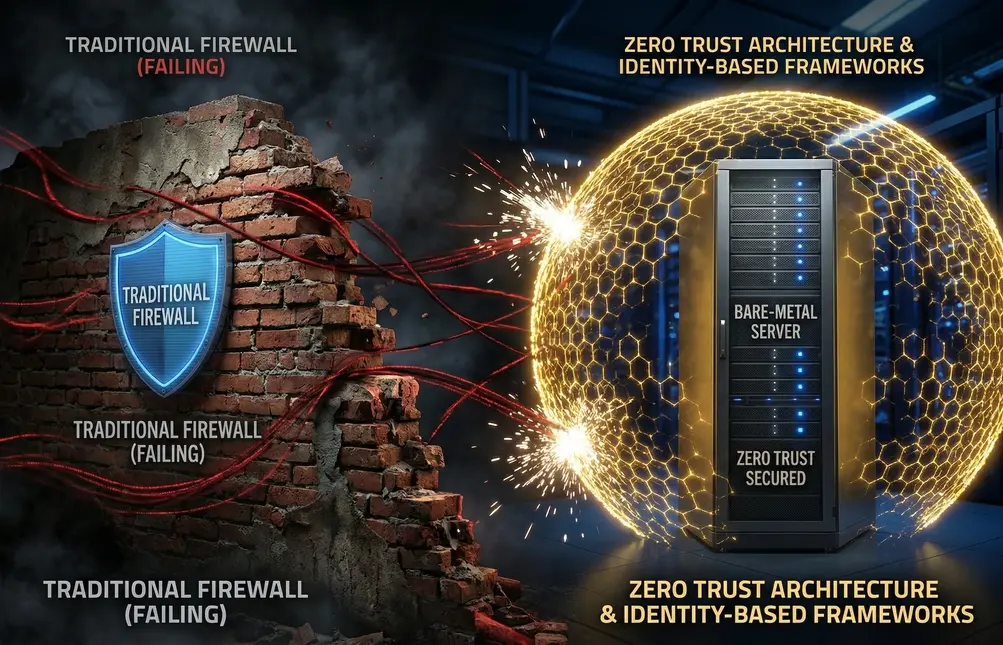
Why can't you just rent an AWS or Google Cloud instance in London or Tokyo? Because the public cloud is built on virtualization, and virtualization is the enemy of deterministic performance.
When you run a trading algorithm on a public cloud VM:
Hypervisor Jitter: The hypervisor software pauses your virtual machine for microseconds at a time to manage physical hardware resources. You have no control over when these pauses happen.
Shared Network Stacks: Your network packets must traverse a virtualized software-defined network (SDN) layer before hitting the physical Network Interface Card (NIC). This adds unpredictable latency spikes.
Noisy Neighbors: Another tenant on your physical host running a heavy database query can steal CPU cache and memory bandwidth, causing your trading execution to stutter at the exact moment the market spikes.
5. The iDatam Bare-Metal Imperative
To win the race to the order book, FinTech architects rely on iDatam's true Bare-Metal Infrastructure.
Zero Virtualization Tax: When you deploy an iDatam server, your trading algorithm runs directly on the raw metal. There is no hypervisor. You have 100% control over CPU pinning, kernel bypassing (using technologies like DPDK or Solarflare NICs), and OS-level optimizations.
Extreme Clock Speeds: HFT workloads are often single-threaded and require processors with massive base clock speeds rather than high core counts. iDatam provides access to the latest generation of high-frequency Intel and AMD architectures.
PCIe Gen 5 NVMe: Ingesting terabytes of historical tick data for backtesting requires massive storage throughput. Our Gen 5 NVMe arrays ensure your backtesting environments run at 14,000 MB/s, accelerating model iteration.
Dedicated Unmetered Network: With iDatam's 10Gbps and 100Gbps Uplinks, you never worry about network congestion or data transfer caps while ingesting massive real-time market data feeds.
Secure Your Edge in the Market
In algorithmic trading, second place is simply the first loser. Do not handicap your brilliant quantitative strategies with unpredictable cloud infrastructure.
Position your algorithms exactly where the markets live. Deploy your HFT architecture on iDatam's isolated, high-performance bare-metal servers.
Ready to eliminate latency? Contact our engineering team today to provision your custom London and Tokyo bare-metal trading clusters.
iDatam Recommended Resources

Hardware
Why Are Intel, AMD, and Ampere Dominating the CPU Market?
When we choose a CPU, we had a lot to consider. However, the landscape of CPUs is mainly dominated by a few key companies depending on the market segment. No matter what kind of CPUs you're looking for, here's a breakdown of how things evolved and where they stand today.


Hardware
What is ARM?
ARM (Advanced RISC Machines) is a widely used family of RISC architectures developed by Arm Ltd., known for its energy efficiency and scalability. Since its founding in 1990, over 180 billion ARM-based chips have been shipped, making it the leading processor family globally.

Hardware
A Complete Guide to RAID Configurations: Balancing Performance and Data Protection
This guide digs into the world of RAID configurations, examining their advantages, disadvantages, and ideal use cases, as businesses and individuals increasingly seek ways to optimize their storage solutions in a data-driven world.
Discover iDatam Dedicated Server Locations
iDatam servers are available around the world, providing diverse options for hosting websites. Each region offers unique advantages, making it easier to choose a location that best suits your specific hosting needs.